Understanding robot dynamics is essential for designing systems that move with precision and efficiency. It involves analyzing forces, motion, and energy to predict how robots behave in real-world environments.

As robotics technology advances, mastering these principles becomes crucial for innovation in automation, healthcare, and beyond. Whether you’re building a simple robotic arm or a complex autonomous vehicle, grasping dynamics unlocks smoother, safer, and smarter operations.
Let’s dive deeper and explore the fascinating world of robot dynamics together!
Fundamentals of Motion and Force in Robotics
Understanding Kinematics: The Language of Movement
Kinematics is essentially the study of motion without considering the forces that cause it. When I first started working with robotic arms, grasping kinematics helped me predict the position, velocity, and acceleration of each joint.
It’s like mapping out a robot’s trajectory in space, which is critical for tasks like pick-and-place operations. Forward kinematics calculates the end-effector’s position based on joint angles, while inverse kinematics does the reverse—figuring out the necessary joint angles to reach a specific point.
Mastering this balance is key to smooth and precise robotic movements.
Dynamics: The Heartbeat of Realistic Robot Control
Unlike kinematics, dynamics dives into the forces and torques driving the robot’s motion. This is where Newton’s laws come into play. Understanding how gravity, inertia, friction, and external loads affect a robot’s joints is fundamental.
When I tested different payloads on a mobile robot, I noticed how ignoring dynamics led to jerky motions and unstable control. Proper dynamic modeling allows controllers to compensate for these forces, ensuring stability and efficiency, especially in robots that interact with unpredictable environments.
Energy Flow and Efficiency in Robots
Energy management is often overlooked but is crucial in robotics, especially for battery-powered systems. I’ve worked on drones where optimizing energy consumption directly extended flight times.
Robots convert electrical energy into mechanical work, but losses due to heat and friction are inevitable. By analyzing energy flow through the system, engineers can design energy-efficient actuators and control strategies.
This not only improves performance but also reduces wear and tear, enhancing the robot’s lifespan.
Modeling Techniques for Accurate Predictions
Lagrangian and Newton-Euler Methods
Two primary methods dominate the landscape of robot dynamics modeling: Lagrangian and Newton-Euler. The Lagrangian method uses energy principles, deriving equations from kinetic and potential energy, which I found elegant but computationally intensive for complex robots.
On the other hand, the Newton-Euler approach applies force and moment balances, which is more intuitive and faster for real-time applications. Choosing between these depends on the robot’s complexity and the computational resources available.
Simulation Tools and Their Role
Before physical testing, I rely heavily on simulation software like Gazebo and MATLAB’s Robotics Toolbox. These tools allow me to model robot dynamics, test control algorithms, and predict behavior under different conditions without risking hardware damage.
Simulations can reveal issues like unexpected vibrations or instability, helping refine designs early. However, the accuracy of these simulations hinges on the quality of the dynamic model and parameter tuning.
Challenges in Dynamic Modeling
One persistent challenge I encountered is accounting for friction and backlash in joints, which are difficult to model precisely but significantly impact performance.
Additionally, real-world uncertainties like payload variations and external disturbances can throw off predictions. This is why adaptive and robust control strategies are often necessary to complement dynamic models, ensuring the robot remains stable and responsive even when conditions change.
Control Strategies Grounded in Dynamics
Feedforward and Feedback Control
Incorporating dynamics into control strategies is where theory meets practice. Feedforward control uses dynamic models to predict required inputs, while feedback control corrects errors in real time.
When I programmed a robotic arm, combining both gave the best results—feedforward handled predictable forces, and feedback adjusted for unexpected changes.
This synergy improves precision and reduces overshoot, making movements smoother and safer.
Advanced Controllers: Adaptive and Robust Approaches
Robots operating in dynamic or uncertain environments benefit from adaptive control, which learns and adjusts parameters on the fly. In contrast, robust control is designed to perform well despite model inaccuracies or disturbances.
I experimented with both on a mobile robot navigating rough terrain; adaptive control improved responsiveness, but robust control ensured stability when unexpected forces hit.
Choosing the right control depends on the application’s demands.
Impact of Dynamics on Safety and Reliability
Safety is non-negotiable, especially in collaborative robots working alongside humans. Understanding dynamics enables the design of controllers that limit forces and velocities, reducing injury risks.
For example, torque sensors combined with dynamic models can detect abnormal forces, triggering emergency stops. From personal experience, integrating these safety features based on dynamic understanding is what transforms a functional robot into a trustworthy partner.
Real-World Applications Shaped by Dynamic Principles
Industrial Automation and Precision Tasks
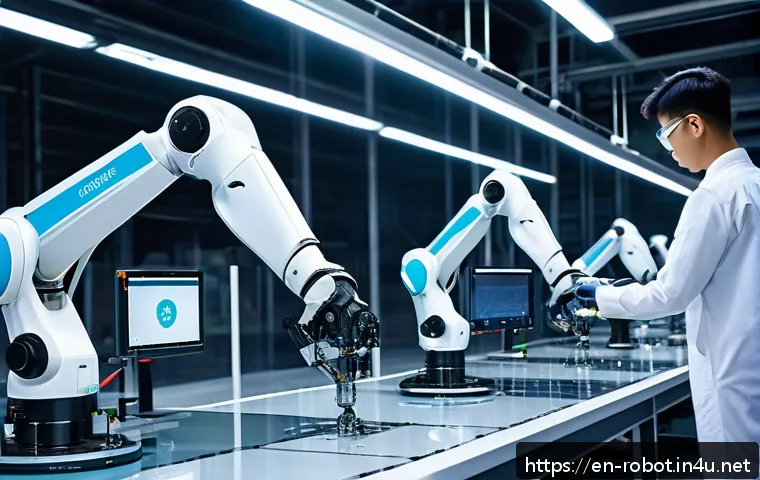
In factories, robotic arms assemble tiny electronics or weld car parts with incredible accuracy. These tasks require precise dynamic modeling to compensate for fast movements and changing loads.
I recall a project where dynamic tuning reduced cycle times without sacrificing accuracy, boosting productivity significantly. This balance of speed and precision is what drives modern industrial robotics forward.
Healthcare Robotics: Gentle Yet Reliable
Robots assisting in surgeries or patient care must move delicately yet reliably. Dynamics helps ensure smooth, controlled motions that prevent harm. For instance, surgical robots use force feedback and dynamic control to adapt to tissue resistance.
Having observed surgical robots in action, I’m convinced that dynamic mastery is pivotal for advancing healthcare robotics safely.
Autonomous Vehicles and Mobility Solutions
Self-driving cars and delivery robots rely heavily on dynamic models to navigate safely. They must predict how acceleration, braking, and turning affect stability and passenger comfort.
In my work with autonomous drones, I noticed how dynamic adjustments to wind gusts improved flight steadiness. This adaptability is essential for real-world deployment where conditions constantly change.
Material Properties and Their Influence on Robot Behavior
Structural Stiffness and Compliance
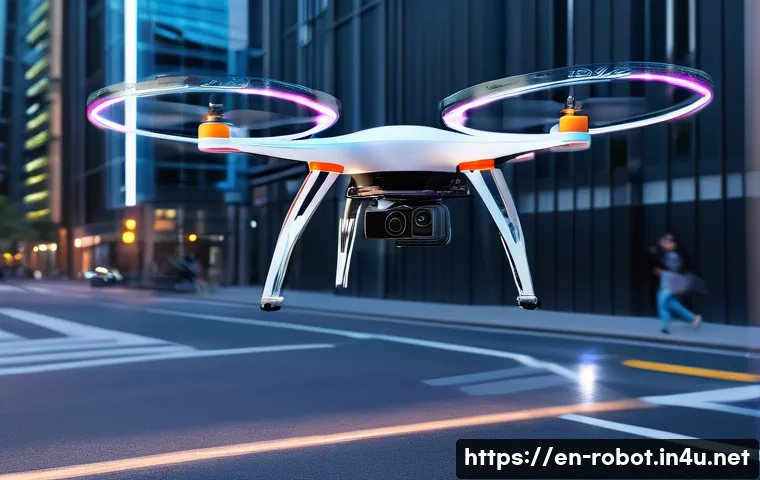
Materials dictate how a robot responds to forces. Stiff materials offer precision but can transmit shocks, while compliant materials absorb impacts but may reduce accuracy.
When I prototyped a soft robotic gripper, understanding material compliance helped me design it to gently handle fragile objects without dropping them.
Balancing stiffness and flexibility is a key design consideration influenced by dynamic principles.
Thermal Effects on Dynamics
Robotic components heat up during operation, affecting material properties and joint friction. I learned that ignoring thermal dynamics can cause drift in sensor readings or unexpected changes in behavior.
Incorporating thermal models allows for compensation strategies, maintaining consistent performance even under heavy loads or long operating times.
Wear and Fatigue Over Time
Dynamic loads cause gradual wear, impacting precision and reliability. Predicting fatigue life requires analyzing stress cycles and dynamic forces. In maintenance planning for industrial robots, I used dynamic data to schedule part replacements before failures occurred, preventing costly downtime.
This proactive approach is vital for long-term operation.
Comparative Overview of Dynamic Modeling Approaches
| Aspect | Lagrangian Method | Newton-Euler Method | Practical Use Cases |
|---|---|---|---|
| Approach | Energy-based formulation using kinetic and potential energy | Force and moment balance on each link | Complex robots requiring detailed energy analysis vs. real-time control |
| Computational Complexity | Higher, due to symbolic differentiation | Lower, suitable for recursive algorithms | Simulation vs. embedded control systems |
| Intuitiveness | More abstract, suitable for theoretical studies | More intuitive, easier to visualize forces | Educational purposes vs. industrial applications |
| Suitability | Best for offline analysis and optimization | Best for real-time control and feedback | Design refinement vs. operation control |
Sensor Integration for Dynamic Feedback
Role of Force and Torque Sensors
Force and torque sensors provide real-time data crucial for dynamic control. In my experience, equipping a robotic arm with these sensors allowed it to adjust grip strength dynamically, preventing damage to delicate objects.
These sensors feed into control algorithms that adapt the robot’s response to external forces, enhancing both precision and safety.
Inertial Measurement Units (IMUs) and Motion Tracking
IMUs offer valuable information about angular velocity and acceleration, helping estimate the robot’s dynamic state. I used IMUs on a drone to stabilize flight by compensating for sudden gusts of wind.
Integrating IMU data with dynamic models improves responsiveness and balance, especially in mobile and aerial robots.
Challenges in Sensor Fusion
Combining data from multiple sensors can be tricky due to noise, delays, and calibration errors. Implementing sensor fusion algorithms like Kalman filters helps create a coherent dynamic picture.
I once debugged a robot that jittered because sensor data wasn’t properly synchronized, underscoring how critical sensor fusion is for reliable dynamics-based control.
Future Trends in Dynamics for Robotics
Machine Learning Enhancing Dynamic Models
Machine learning is starting to augment traditional dynamic models by learning complex, nonlinear behaviors from data. I experimented with neural networks to predict friction effects that classical models missed, resulting in smoother control.
This hybrid approach promises to make robots more adaptable and efficient in unpredictable environments.
Soft Robotics and Dynamic Complexity
Soft robots introduce new dynamic challenges because their shape and stiffness change during operation. Modeling these requires advanced continuum mechanics and real-time computation.
Working on soft robotic prototypes, I realized that traditional rigid-body dynamics fall short, pushing the need for novel modeling techniques to unlock their full potential.
Real-Time Adaptive Control Systems
The future lies in control systems that continuously learn and adapt to changing dynamics. Real-time adaptation can compensate for wear, load changes, or environmental shifts without manual tuning.
From my trials with adaptive controllers, I’m excited about robots that self-optimize during operation, making them more autonomous and reliable than ever before.
Conclusion
Understanding the fundamentals of motion and force in robotics is essential for developing precise, efficient, and reliable robotic systems. Through hands-on experience and continuous learning, it becomes clear how dynamic modeling and control strategies shape robot behavior in real-world applications. Embracing these principles opens the door to innovations that make robots safer, smarter, and more adaptable to ever-changing environments.
Useful Information to Remember
1. Kinematics helps predict robot movement by focusing on positions and velocities without considering forces, making it fundamental for planning trajectories.
2. Dynamics involves forces and torques, which are crucial for realistic control and stability, especially when robots interact with varying loads and environments.
3. Combining feedforward and feedback control strategies leads to smoother and more accurate robotic motions by anticipating and correcting errors.
4. Sensor integration, such as force sensors and IMUs, enhances dynamic feedback, enabling robots to respond precisely to external influences.
5. Emerging trends like machine learning and soft robotics are expanding the complexity and capability of dynamic models, driving future advancements.
Key Takeaways
Mastering both kinematic and dynamic principles is vital for effective robot design and control. Realistic dynamic modeling ensures smooth operation and safety, while adaptive control strategies help robots handle uncertainties and changing conditions. Integrating sensor data accurately is critical for responsive behavior, and staying updated with emerging technologies like machine learning will keep robotics at the forefront of innovation. Prioritizing these aspects leads to smarter, safer, and more efficient robotic systems in various industries.
Frequently Asked Questions (FAQ) 📖
Q: Why is understanding robot dynamics important for designing robotic systems?
A: Understanding robot dynamics is crucial because it allows engineers to predict how a robot will move and react to forces in its environment. Without this knowledge, robots may move inefficiently, lack precision, or even become unsafe.
By mastering dynamics, you can design systems that operate smoothly and effectively, whether it’s a simple arm or a complex autonomous vehicle. From my experience, focusing on dynamics early in the design phase saves a lot of trial and error later on.
Q: What are the key components involved in analyzing robot dynamics?
A: The main components include forces, motion, and energy. Forces tell us what’s pushing or pulling the robot’s parts, motion describes how these parts move, and energy considerations help us understand efficiency and power consumption.
In practice, engineers use equations of motion and simulations to model these factors. I’ve found that combining theoretical models with real-world testing leads to the most reliable results.
Q: How does mastering robot dynamics contribute to advancements in fields like healthcare and automation?
A: Mastering robot dynamics enables the creation of robots that move precisely and adapt smoothly to changing environments, which is essential in sensitive fields like healthcare.
For instance, surgical robots need to perform delicate operations with minimal error, and automated systems in factories must handle tasks quickly without damaging products.
From what I’ve seen, when developers deeply understand dynamics, they can innovate smarter, safer robots that improve productivity and patient outcomes alike.