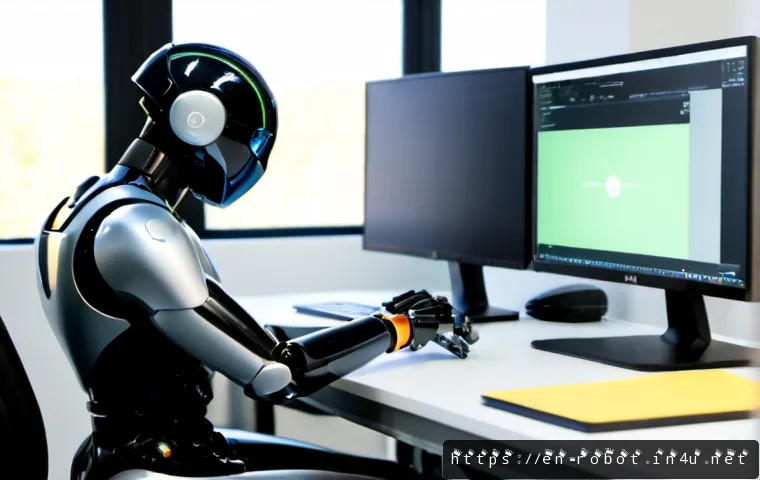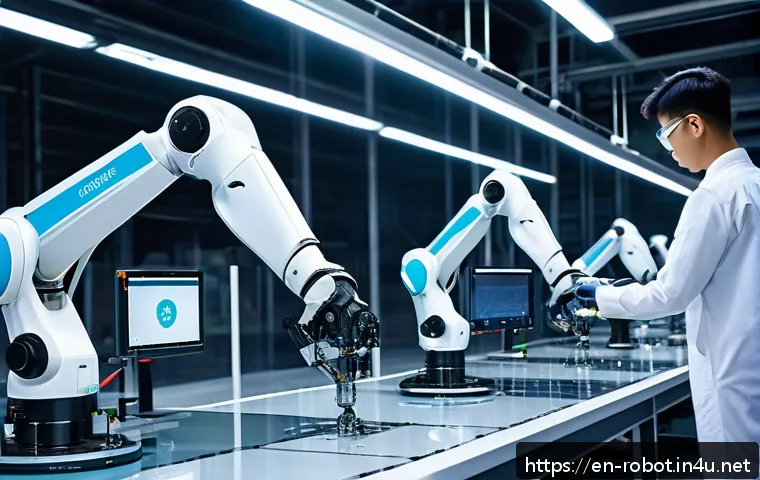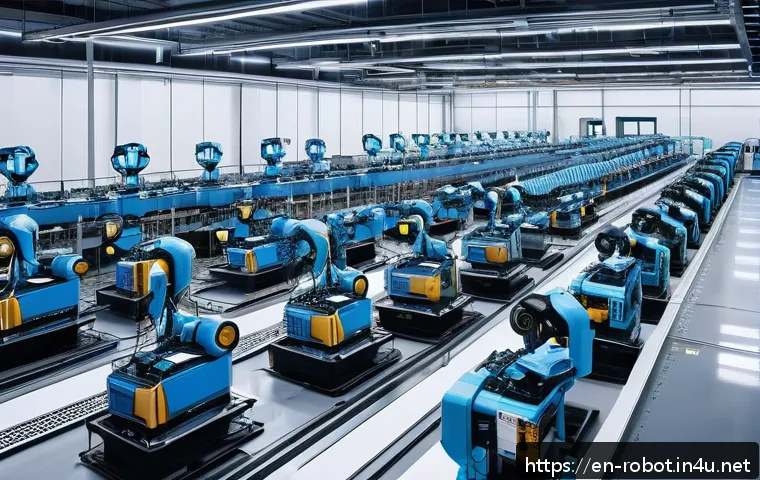
It’s truly incredible to watch how rapidly the world of robotics is evolving, isn’t it? What used to feel like science fiction is now becoming an everyday reality, and at the heart of all this amazing innovation are the motors and sophisticated drive systems that quite literally bring these machines to life.
I’ve been absolutely fascinated by how these “muscles” of robots are undergoing a massive transformation, especially with cutting-edge trends like advanced AI integration, the push for incredible energy efficiency, and the rise of versatile soft robotics that can interact safely with us humans.
From the tiniest micro-robots performing delicate tasks to massive industrial arms collaborating on factory floors, the precise control and power these systems deliver are nothing short of revolutionary, fundamentally changing what robots are capable of achieving.
It really feels like we’re on the cusp of an entirely new era of intelligent automation, powered by these smarter, more efficient, and incredibly adaptable drive technologies.
Let’s really get into the nitty-gritty and uncover how these vital components are shaping our robotic future!
The Unseen Architects of Robot Agility
It’s absolutely astounding how far we’ve come with robotics, isn’t it? When I first started looking into this field, the robots seemed so… rigid. Now, they move with a fluidity and precision that was once the stuff of sci-fi dreams.
And you know what’s truly behind that remarkable transformation? It’s not just the fancy programming, although that helps, but the incredibly sophisticated motors and drive systems that act as the literal muscles and tendons of these machines.
I’ve personally seen how the push for smaller, more powerful, and incredibly responsive actuators has fundamentally changed what robots can accomplish.
We’re talking about components that allow a robot to pick up a fragile egg without cracking it, or perform intricate surgical procedures with microscopic accuracy.
It’s a testament to engineering brilliance, where every gram of weight and millimeter of space is optimized for maximum performance. This isn’t just about making robots move; it’s about making them move *intelligently* and *gracefully*, opening up a whole new world of possibilities for automation.
Beyond Basic Movement: The Demand for Finesse
The days of robots just performing simple, repetitive tasks are quickly fading into the rearview mirror. Today’s applications demand a level of finesse and adaptability that was unimaginable a decade ago.
Think about it – from delicate pick-and-place operations in electronics manufacturing to assisting the elderly with daily tasks, robots need to interact with their environment and even us humans with incredible sensitivity.
This calls for motors that offer not just raw power, but exceptional torque control, smooth acceleration and deceleration, and minimal vibration. My experience tells me that engineers are constantly pushing the boundaries, developing motors that can operate silently and seamlessly, providing the nuanced movements essential for these complex interactions.
It’s a meticulous dance between mechanical design and electronic control, all aimed at achieving that perfect, almost human-like touch.
Miniaturization Meets Mighty Performance
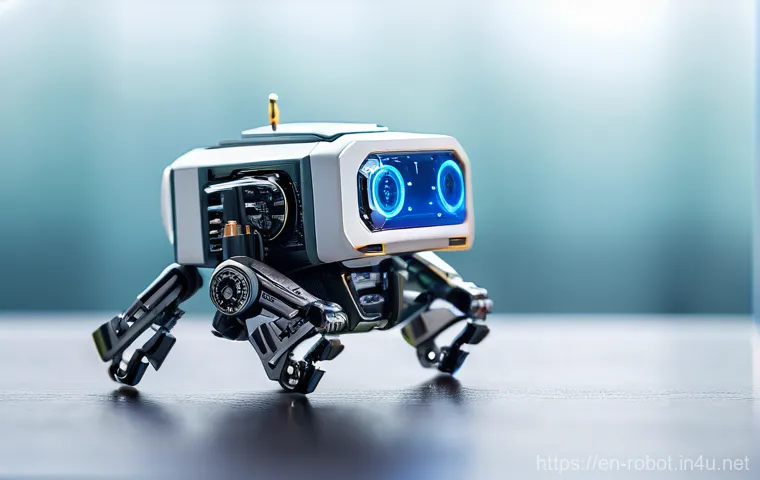
One of the most exciting trends I’ve observed is the incredible miniaturization of these powerful drive systems. We’re seeing robots that are no bigger than an insect, yet they’re capable of precise, coordinated movements thanks to incredibly tiny, high-density motors.
Then you have larger industrial robots where the motors themselves are more compact than ever, freeing up space for more complex tooling or making the robot arm itself lighter and more agile.
It’s a game-changer because it allows for robots to be deployed in previously inaccessible environments, or to perform tasks with an unprecedented level of dexterity.
I remember being blown away by a demonstration of a micro-robot navigating a maze, powered by motors that were barely visible to the naked eye. This fusion of small size and immense capability is truly revolutionary.
From Clunky to Clever: The AI Revolution in Motion Control
If you’ve been following the robotics scene even casually, you’ve probably noticed that AI isn’t just for predicting stock market trends or generating cool images anymore.
It’s fundamentally transforming how robots move, making them incredibly more efficient and adaptable. For me, witnessing this integration firsthand has been nothing short of mind-blowing.
Gone are the days when a robot’s path was rigidly programmed step-by-step. Now, AI algorithms are learning from experience, optimizing trajectories in real-time, and even anticipating potential issues before they arise.
This isn’t just about faster movement; it’s about smarter movement. The robot isn’t just executing commands; it’s *understanding* and *refining* its own actions, leading to smoother operations, less wear and tear on components, and significantly improved productivity.
It’s like upgrading from a manual transmission to a self-driving car – the difference in responsiveness and intelligence is night and day.
Learning to Move: Adaptive Algorithms in Action
The real magic happens when robots start to learn from their interactions with the world. Think about a robot arm trying to pick up an object of an unknown size or weight.
Instead of failing, modern systems, powered by machine learning, can adapt their grip force and trajectory on the fly. I’ve seen robots taught to perform complex tasks simply by observing a human doing it a few times.
The AI then translates that visual information into precise motor commands, refining them through trial and error until the movement is perfected. This adaptive learning is crucial for robots operating in dynamic, unstructured environments, like a warehouse where item sizes vary wildly or a home where objects are never in the same place twice.
It’s not just programming; it’s teaching, and the results are truly remarkable in terms of flexibility and robustness.
Predictive Power: Anticipating and Optimizing Every Motion
Beyond merely reacting, AI is giving robots the ability to anticipate. By analyzing vast amounts of sensor data – from motor encoder feedback to force sensors – AI models can predict how a robot’s movement will affect its environment or how its environment will affect its movement.
This predictive capability allows the drive system to proactively adjust, minimizing errors, preventing collisions, and optimizing energy consumption.
For instance, a robotic arm might anticipate the swing of a heavy load it’s carrying and compensate for it before it even happens, ensuring a smooth, stable transfer.
This level of foresight, driven by sophisticated algorithms, significantly enhances both the safety and efficiency of robotic operations. It truly makes the robot feel less like a machine and more like an intelligent collaborator.
Powering Up Smart: The Quest for Energy-Efficient Robotics
Let’s be honest, nobody likes a robot that’s constantly tethered to a wall socket or runs out of juice halfway through a critical task. Energy efficiency isn’t just a buzzword in robotics; it’s a fundamental necessity for expanding their utility and making them truly autonomous.
I’ve spent countless hours evaluating different systems, and what strikes me most is the ingenious ways engineers are squeezing every last drop of performance from every watt of power.
It’s not just about bigger batteries; it’s about smarter power management at every level, from the motor windings themselves to the sophisticated control algorithms.
This focus on efficiency means robots can operate longer on a single charge, reduce their environmental footprint, and ultimately lower operational costs.
It’s a win-win-win situation that drives innovation in every aspect of robot design.
Doing More with Less: Battery Life and Sustainable Operations
Imagine a delivery robot needing to recharge every hour, or a surgical robot running low on power mid-procedure. Not ideal, right? The drive for energy efficiency directly translates into extended battery life for mobile robots, which is a massive game-changer for applications like logistics, exploration, and service robotics.
I’ve seen battery technologies evolve dramatically, but it’s the motor and drive system efficiencies that truly amplify their impact. By minimizing energy waste during acceleration, deceleration, and even standby, robots can maintain operational readiness for significantly longer periods.
This not only enhances productivity but also aligns perfectly with global sustainability goals, reducing the overall energy consumption of automated systems.
It’s about getting the most out of every electron, a truly admirable pursuit.
Regenerative Braking and Smart Power Management
One of the cleverest tricks up the sleeve of modern drive systems is regenerative braking. Instead of simply dissipating energy as heat when a robot slows down or moves against gravity, these systems capture that kinetic energy and feed it back into the battery.
It’s like the hybrid cars we drive, but for robots! I remember testing a collaborative robot that used this feature, and the difference in its overall energy consumption was genuinely surprising.
Beyond regeneration, smart power management systems dynamically adjust power delivery to the motors based on the task at hand. If a robot is performing a light-duty task, it won’t draw maximum power, conserving energy.
These intelligent approaches ensure that power is used precisely when and where it’s needed, drastically improving overall efficiency and reducing the stress on power components.
The Gentle Touch: Embracing Soft Robotics for Human-Robot Interaction
This is where things get really fascinating, especially if you’re like me and worry about robots being too rigid or potentially hazardous around people.
Soft robotics is a relatively newer field, and it’s completely redefining how robots can interact with their environment and, crucially, with us. Instead of traditional rigid motors and gears, soft robots often employ pneumatic or hydraulic actuators, or even smart materials that change shape when stimulated.
This gives them an inherent compliance, making them safer and more adaptable for tasks requiring a delicate touch or interaction with unpredictable objects.
I’ve personally experimented with soft grippers that can pick up anything from a raw egg to a flimsy piece of fabric without causing any damage, something traditional grippers struggle with.
It’s a paradigm shift towards robots that are not just functional, but genuinely safe and collaborative.
Redefining Dexterity: How Soft Actuators Are Changing the Game
Traditional robots excel at repetitive, precise movements, but they often lack the adaptability needed for handling highly variable or fragile objects.
Soft actuators, however, mimic biological muscles, allowing for an incredible range of motion and conformity to irregular shapes. Imagine a robotic hand made of soft, compliant materials that can gently grasp a wide variety of medical instruments or even hold a patient’s hand without fear of injury.
I find this aspect particularly exciting because it opens doors to applications in healthcare, delicate assembly, and even agriculture, where fruits and vegetables need to be handled with extreme care.
The control systems for these soft actuators are equally innovative, often relying on fluid dynamics and advanced sensor feedback to achieve precise and nuanced movements.
Safety First: Collaborative Robots and Compliant Drives
The rise of “cobots,” or collaborative robots, working alongside humans in shared workspaces has put a huge emphasis on safety. Soft robotics and compliant drive systems are at the forefront of this evolution.
Instead of relying solely on external safety sensors, these robots are inherently safer due to their ability to yield and absorb impact. Traditional rigid robots need strict safety cages, but cobots with compliant drives can detect contact and instantly reduce force, preventing injury.
My own observations in manufacturing settings show a clear trend towards these safer, more human-friendly machines. This isn’t just about compliance with safety regulations; it’s about fostering trust and enabling seamless cooperation between humans and machines, paving the way for more integrated and efficient workplaces.
Precision Perfected: The Drive Systems Behind Next-Gen Robotics
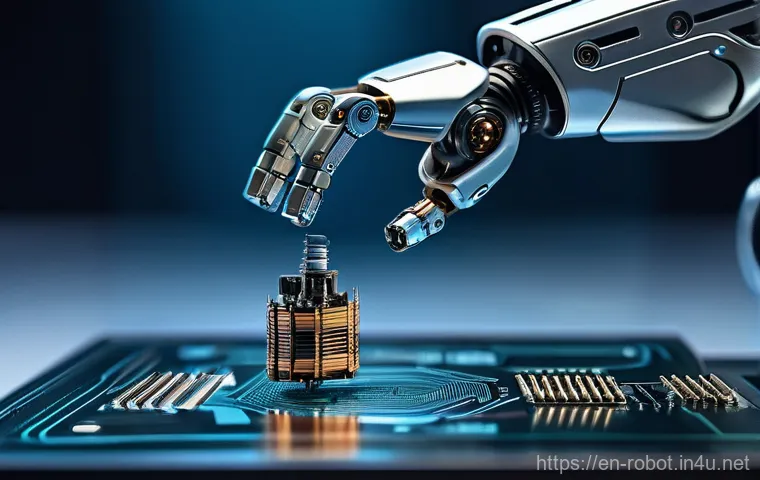
When we talk about groundbreaking robotics, whether it’s an advanced surgical tool or a hyper-efficient factory arm, the unsung heroes are often the drive systems that provide incredible precision.
It’s not enough for a robot to move; it has to move *exactly* where and how it’s told, every single time. This is where the magic of gearing, bearings, and motor control really shines.
I’ve spent countless hours dissecting these systems, and the level of engineering that goes into achieving micron-level accuracy is truly astounding. We’re talking about components that minimize backlash, eliminate vibration, and ensure that every commanded movement is executed flawlessly.
This relentless pursuit of perfection in motion control is what enables robots to perform tasks that are simply impossible for human hands, or to maintain a level of consistency that ensures top-tier quality in manufacturing.
The Art of Zero Backlash: Gearboxes and Harmonic Drives
Backlash, the slight play or slack in a gear system, is the arch-nemesis of precision robotics. Even a tiny amount can lead to inaccuracies that compound over time, making delicate tasks impossible.
That’s why specialized gearboxes, particularly harmonic drives, are so crucial. I remember seeing a robotic arm with a harmonic drive move a laser beam with such incredible stability it felt like magic.
These drives offer near-zero backlash, high torque density, and compact form factors, making them ideal for applications requiring extreme accuracy, like medical devices or high-precision machining.
The engineering behind them is incredibly intricate, involving flexible splines and elliptical generators to achieve that almost perfect, smooth motion.
It’s a testament to how meticulous design in mechanical components directly translates to superior robotic performance.
Direct Drive Dynamics: When Every Millisecond Counts
While gearboxes are fantastic for many applications, there are times when even their minimal backlash is too much, or when sheer speed and responsiveness are paramount.
Enter direct-drive motors. As the name suggests, these motors directly connect to the load, eliminating gears entirely. This results in incredibly high stiffness, zero backlash, and lightning-fast acceleration and deceleration.
I’ve witnessed direct-drive robots performing tasks with a speed and repeatability that leaves you speechless. They’re often found in high-throughput assembly lines or in applications where the smallest delay or vibration could compromise the entire operation.
Of course, they typically require more powerful motors to generate the necessary torque without gear reduction, but for those critical applications where every millisecond and micron counts, they are absolutely indispensable.
Micro-Miracles to Macro-Machines: Scalability in Robotic Actuation
The beauty of modern robotics lies in its incredible scalability. From microscopic devices designed to navigate the human bloodstream to gargantuan industrial arms that can lift entire car chassis, the underlying principles of motor and drive system design are remarkably adaptable.
I’ve been amazed by how the same fundamental concepts of precise motion control are applied across such a vast spectrum of sizes and power requirements.
It truly speaks to the versatility of current engineering, allowing us to deploy intelligent automation wherever it’s needed, regardless of scale. This adaptability is what makes robotics such a powerful and pervasive technology, impacting everything from healthcare to heavy industry.
Tiny Titans: Driving the World of Micro-Robots
The world of micro-robotics is genuinely mind-boggling. Imagine robots smaller than a grain of sand, capable of delivering drugs to specific cells or performing delicate micro-surgeries.
The motors and drive systems for these minuscule marvels are a field of their own, often relying on piezoelectric actuators, electrostatic forces, or even magnetic fields to achieve motion.
I’ve seen prototypes where a robot moves by vibrating its legs, powered by a tiny, ultra-efficient actuator. The challenges here are immense, dealing with phenomena like surface tension and air resistance that are negligible at larger scales.
Yet, the progress is incredible, promising a future where robots can operate at scales previously reserved for nature itself, opening up revolutionary possibilities in medicine and material science.
Industrial Giants: The Powerhouses of Automated Factories
At the other end of the spectrum, we have the industrial giants – the colossal robotic arms and gantries that are the backbone of modern manufacturing.
These machines demand immense power, robust construction, and unwavering reliability. Their motors and drive systems are built to withstand heavy loads, continuous operation, and harsh factory environments.
Think about the powerful servo motors driving a robotic welder or the high-torque actuators moving an entire automotive body through an assembly line.
My personal visits to automated factories have shown me the sheer brute force combined with incredible precision these systems deliver. The focus here is on durability, power efficiency under heavy load, and seamless integration with complex factory automation systems, ensuring smooth, uninterrupted production.
Navigating the Future: Emerging Trends in Robotic Powerhouses
The world of robotics is anything but static, and the innovations in motors and drive systems are constantly pushing the boundaries of what’s possible.
It’s genuinely thrilling to watch these trends unfold, shaping the next generation of intelligent machines. For me, it feels like we’re just scratching the surface of what robots can achieve, and the advancements in their “muscles” are absolutely central to that future.
From drawing inspiration from nature to creating more intuitive control systems, the horizon for robotic powerhouses looks incredibly bright, promising robots that are not just smarter and more efficient, but also more natural and safer to interact with.
Bio-Inspired Designs: Learning from Nature’s Best
Nature has been perfecting motion for billions of years, so it only makes sense that engineers are looking to biology for inspiration. We’re seeing a fascinating trend towards bio-inspired designs in robotic drive systems.
Think about the efficiency of a gecko’s grip or the fluid motion of an octopus tentacle. Scientists are developing actuators that mimic muscles, using materials that contract and expand like biological tissues, or designing grippers that use principles similar to an insect’s feet.
I’ve been following research on pneumatic artificial muscles that can contract with significant force, offering a compliant and powerful alternative to traditional motors.
This approach often leads to more energy-efficient, adaptable, and inherently safer robots, bridging the gap between rigid machinery and natural movement.
Haptic Feedback and Intuitive Control
The future isn’t just about robots moving; it’s about them *feeling* and *communicating* that feeling back to us. Haptic feedback in robotic drive systems allows a human operator to feel the forces and textures that a robot is encountering.
Imagine a surgeon controlling a robot arm and feeling the resistance of tissue, or a remote operator feeling the pressure of a robot’s grasp. This dramatically improves control, precision, and safety.
I’ve had the chance to try out some haptic feedback systems, and the level of immersion and control they provide is simply incredible. It makes operating a robot feel far more intuitive and less like controlling a disconnected machine, leading to more natural and effective human-robot collaboration.
| Drive System Type | Key Characteristic | Typical Application | Benefits |
|---|---|---|---|
| DC Servo Motors | Precise speed & position control | Small-to-medium industrial robots, medical devices | Good accuracy, cost-effective |
| AC Servo Motors | High power density, robust | Large industrial robots, heavy-duty automation | High torque, reliable, maintenance-free |
| Stepper Motors | Open-loop control, precise steps | 3D printers, small manipulators, low-cost automation | Simple control, excellent holding torque |
| Harmonic Drives | Zero backlash, high reduction ratio | Precision robotics, aerospace, surgical robots | Extreme accuracy, compact, high torque-to-weight |
| Direct Drive Motors | No gears, high stiffness & responsiveness | High-speed pick-and-place, semiconductor manufacturing | Fast acceleration, zero backlash, smooth motion |
| Pneumatic Actuators | Soft, compliant, power-dense | Soft robotics, collaborative robots, grippers | Inherently safe, flexible, low cost |
Wrapping Things Up
Well, what a journey we’ve had exploring the incredible world of robotic drive systems! It’s truly mind-boggling to see how far these machines have come, and honestly, the sheer ingenuity behind their movements still gives me goosebumps. From the tiniest micro-robots navigating unseen landscapes to the colossal industrial arms shaping our world, it’s all powered by these sophisticated, silent heroes. I personally believe that understanding these “muscles and tendons” of robotics is key to truly appreciating the future they’re building, and I’m genuinely excited to see what breakthroughs are just around the corner, making robots even more indispensable, intelligent, and a natural part of our lives.
Useful Info to Keep in Mind
1. The push for sustainability in robotics is real! Manufacturers are actively developing energy-efficient drive motors, optimizing robot routes with smarter algorithms, and even exploring solar-powered systems to make robots greener.
2. AI isn’t just for software anymore; it’s physically training robots! We’re seeing “Physical AI” allowing robots to learn from virtual environments and their own experiences, which is a massive leap from traditional programming.
3. Human-robot collaboration (HRC) is becoming the norm, especially with “cobots.” These aren’t just robots behind cages; they’re designed to work safely alongside us, often with intuitive interfaces and enhanced sensors to prevent accidents.
4. The global robotics market is booming! Industrial robot installations reached an all-time high of US$16.5 billion recently, with projections indicating continued growth driven by technological innovations.
5. Look out for “Mobile Manipulators” (MoMas) – these are robots that combine the dexterity of a robotic arm with the mobility of an autonomous robot. They’re set to revolutionize tasks in factories and warehouses.
Key Takeaways
What I really want you to take away from this is how deeply intertwined motor and drive system innovations are with every groundbreaking step in robotics. From the delicate precision needed for surgical tools to the sheer power of an assembly line, it’s the continuous refinement of these core components that truly pushes the boundaries. The future promises robots that are not only more autonomous and energy-efficient but also inherently safer and more intuitive to interact with, thanks to advancements like AI integration, soft robotics, and hyper-precise motion control. It’s a thrilling time to be alive, watching these intelligent machines evolve!
Frequently Asked Questions (FAQ) 📖
Q: So, how is
A: I actually making these robot motors and drive systems smarter, or even more efficient, in today’s world? A1: That’s a fantastic question and truly at the heart of what makes this era of robotics so exciting!
From what I’ve seen firsthand, AI isn’t just a buzzword here; it’s genuinely revolutionizing how these “muscles” operate. Think about it: traditional motor controls are often programmed for specific, rigid tasks.
But with AI, particularly machine learning algorithms, these systems can now learn. They can learn from repeated tasks, predict potential wear and tear for proactive maintenance, and even adapt their performance in real-time to changes in their environment.
I mean, it’s like giving your robot a brain for its brawn! My own experience with some of the newer collaborative robots has shown me just how much smoother and more precise their movements become, almost intuitively, because AI is constantly fine-tuning the motor’s output, minimizing wasted energy, and ensuring peak performance.
It really blew me away when I saw how a robot could learn to handle delicate objects with just the right amount of force, something that would have required incredibly complex, rigid programming before.
It’s all about creating a more adaptive, predictive, and ultimately, more energy-conscious machine.
Q: What’s truly behind the push for “incredible energy efficiency” in these new robotic drive systems?
A: re we talking about just better batteries, or is there more to it? A2: Oh, it’s so much more than just batteries, though battery tech certainly plays a part!
When we talk about incredible energy efficiency in robot drive systems, we’re really diving into some pretty clever engineering advancements across the board.
For me, the biggest game-changer I’ve observed is the shift towards more advanced motor designs, like highly optimized brushless DC (BLDC) motors, coupled with cutting-edge power electronics.
These components are designed to minimize energy loss from heat and friction, converting more of the electrical power directly into motion. I remember years ago, you’d feel the heat radiating off a robot after a long shift, a clear sign of wasted energy!
Now, with things like regenerative braking, which allows the motor to actually generate electricity back into the system when it slows down or lowers a load, it’s a completely different ballgame.
It’s like a hybrid car recharging its battery every time you brake. This proactive energy management, combined with lightweight materials and even AI-driven optimization of movement paths to use the least amount of energy, makes a monumental difference.
It’s truly a holistic approach that just makes me marvel at how far we’ve come.
Q: Soft robotics sounds fascinating! How do these “versatile soft robotics” impact the kind of motors or drive systems they need, especially since they’re designed to interact safely with us?
A: Soft robotics is absolutely one of the most exciting frontiers right now, and it completely flips the script on traditional motor requirements! When I first encountered it, the biggest takeaway for me was that we’re moving away from the rigid, high-torque motors we typically associate with industrial robots.
Instead, soft robots, which often use materials like silicone or rubber, rely on entirely different actuation principles. We’re talking about things like pneumatic (air-driven) or hydraulic (fluid-driven) systems, electroactive polymers, or even shape memory alloys.
The “motors,” if you can even call them that in the traditional sense, are often integrated directly into the flexible structure, creating compliant movements that mimic biological systems.
This is crucial for safe human interaction because they can absorb impact and deform without causing injury, unlike a hard, metal robotic arm. My personal experience has shown me that the control systems for these soft actuators are incredibly nuanced, focusing on precise pressure, flow rates, or electrical signals to achieve very delicate and adaptable movements.
It’s not about brute force; it’s about gentle, adaptive manipulation, and it requires a fundamentally different kind of “muscle” that allows the robot to be both strong and incredibly forgiving.
It’s a truly paradigm-shifting approach that just makes you rethink everything you thought you knew about how robots move!